November 21, 2026
Can moss wall art soften a plain interior wall?
By @frameandfoliage
Yes, and here is how it works
A bare wall can feel cold, unfinished, or simply too quiet. Many people look for a way to add texture and warmth without committing to a full renovation. Preserved moss wall art offers a natural solution. Because the moss retains its soft, spongy look and green color for years, it brings a living quality into the room without the upkeep of live plants. The texture alone breaks up a flat surface, creating depth and visual interest that paint or wallpaper cannot match.
Framed moss wall art works especially well on a plain wall because the frame provides a clear boundary. The contrast between the rigid outer edge and the organic, irregular moss inside creates a focal point that draws the eye. The result is a wall that feels curated rather than bare, and the softness of the moss introduces a tactile element that even a well-chosen painting lacks. For anyone wondering whether this approach can truly soften a space, the short answer is yes, but the effect depends on placement, scale, and how the piece relates to the rest of the room.
Why moss works where other decor does not
A plain interior wall often suffers from being too smooth and too uniform. Paint, even in a rich color, still feels flat because the surface has no variation. A framed photograph or print adds visual content but no physical texture. Moss, on the other hand, has a three-dimensional surface. Its tiny leaves and varied shades of green catch natural light differently throughout the day, giving the wall a subtle, ever-changing appearance.
This natural variation softens the hard lines of a room. If your space has many straight edges, from furniture, window frames, or doorways, the organic shape of a moss panel provides a visual counterpoint. The moss does not demand attention the way a bright painting might; it sits quietly and adds warmth without shouting. That makes it a good choice for rooms where you want calm, such as a bedroom or a reading nook.
Another advantage is acoustic. Moss, especially when mounted in a frame with a backing board, can absorb a small amount of sound. The effect is modest, but in a room with hard floors and bare walls, even a slight reduction in echo can make the space feel more comfortable and less harsh. This acoustic benefit is a bonus, not the main reason to install it, but it contributes to the overall softening effect.

Choosing the right size and placement
Scale matters more than most people expect. A small piece of moss art on a large wall can look like an afterthought. It will not soften the wall because it gets lost in the empty space around it. For a plain wall, consider a piece that covers at least a quarter to a third of the wall's width. A single large panel or a cluster of smaller frames arranged in a gallery wall can achieve the same effect.
Placement also affects how the moss reads in the room. Eye level is the default, but you can also hang a piece lower if it sits behind a sofa or a console table. The key is to let the moss relate to the furniture below it. If the frame floats too high, it loses its connection to the room and becomes an isolated object rather than part of the decor.
Natural light plays a role too. Moss looks best in indirect light. Direct sunlight can fade the preserved color over time, and it also creates harsh shadows that make the texture look less soft. A wall that receives morning or late afternoon light is ideal. If the wall faces south or west, consider placing the moss where it gets some shade from a curtain or a nearby piece of furniture.
Matching the frame to the room
The frame is not just a holder; it sets the tone for the whole piece. A dark wood frame gives a traditional, grounded feel. A light wood frame feels more casual and airy. A black or white frame is neutral and works in modern interiors. The choice should echo other finishes in the room, such as the furniture or window trim.
For a room with warm wood tones, a walnut or oak frame ties the moss to the existing palette. In a minimalist space with pale walls and light floors, a white or natural oak frame keeps the look clean. If the room has metal accents, black lamp bases, chrome legs, a black frame can pick up that detail and create visual balance.
Some people prefer a frameless look, where the moss extends to the edge of a flat backing board. That style works well in very contemporary settings, but it can feel less finished in a traditional home. The framed version, with a visible border, usually reads as more deliberate and polished. That is why framed moss wall art is the most popular choice for softening a plain wall, it combines the organic texture of moss with the clean line of a frame, giving the wall both character and structure.
How it fits into a gallery wall
A gallery wall is a collection of framed pieces arranged together. Moss can play several roles here. It can serve as the anchor piece, the largest and most textured item, with smaller prints or photos grouped around it. Or it can act as a textural accent among mostly flat pieces. In either case, the moss breaks up the uniformity of a row of prints and adds a natural element that contrasts with paper or canvas.

When mixing moss with other art, pay attention to visual balance. If the moss is dark green, pair it with lighter prints to avoid a heavy look. If the moss is a bright, lively green, it can stand next to black-and-white photography without competing. The goal is to let the moss soften the wall without overwhelming the other pieces.
Hanging hardware matters for a gallery wall because the arrangement needs to stay level and secure. Moss panels can be heavier than they look, especially in larger sizes. Use anchors rated for the weight, and check that the frame has a sturdy hanging system on the back. A well-hung gallery wall feels intentional; a crooked one undermines the softening effect.
Room scale and wall color considerations
The size of the room influences how much moss you need. In a small room, a single medium-sized frame can be enough to soften the wall. In a large open-plan space, you may need multiple panels or a very large piece to make an impact. Think of the moss as a soft focal point that should be proportional to the area of the wall and the volume of the room.
Wall color also changes how the moss reads. On a white or very light wall, the green of the moss stands out clearly, and the texture becomes the main event. On a dark wall, the moss can blend in more, creating a subtle, moody effect. If your wall is already a deep color, choose a moss that has lighter or brighter green tones so it does not disappear. If the wall is pale, almost any moss shade will work, but a mix of moss types, some flat, some fluffy, adds extra depth.
For those who want to explore options and see how different frames and moss combinations look, a site like mosswallart.design offers practical guidance and ready-made pieces that take the guesswork out of sizing and styling. The site focuses on preserved moss wall art kits and finished panels, so it is a useful reference for anyone planning a project.
Maintenance and longevity
One of the best things about preserved moss is that it requires almost no care. It does not need water, soil, or sunlight. It will not grow or change shape. The preservation process replaces the natural moisture with a glycerin-based solution that keeps the moss flexible and green for years. The only maintenance is occasional dust removal. A soft brush or a gentle blast of air from a hairdryer on the cool setting is enough to keep it clean.
Do not hang preserved moss in a bathroom or other high-humidity area unless the space is well-ventilated. Constant moisture can cause the moss to degrade over time. A living room, bedroom, or hallway is ideal. With reasonable care, a preserved moss panel can last five years or more before it starts to fade or become brittle.
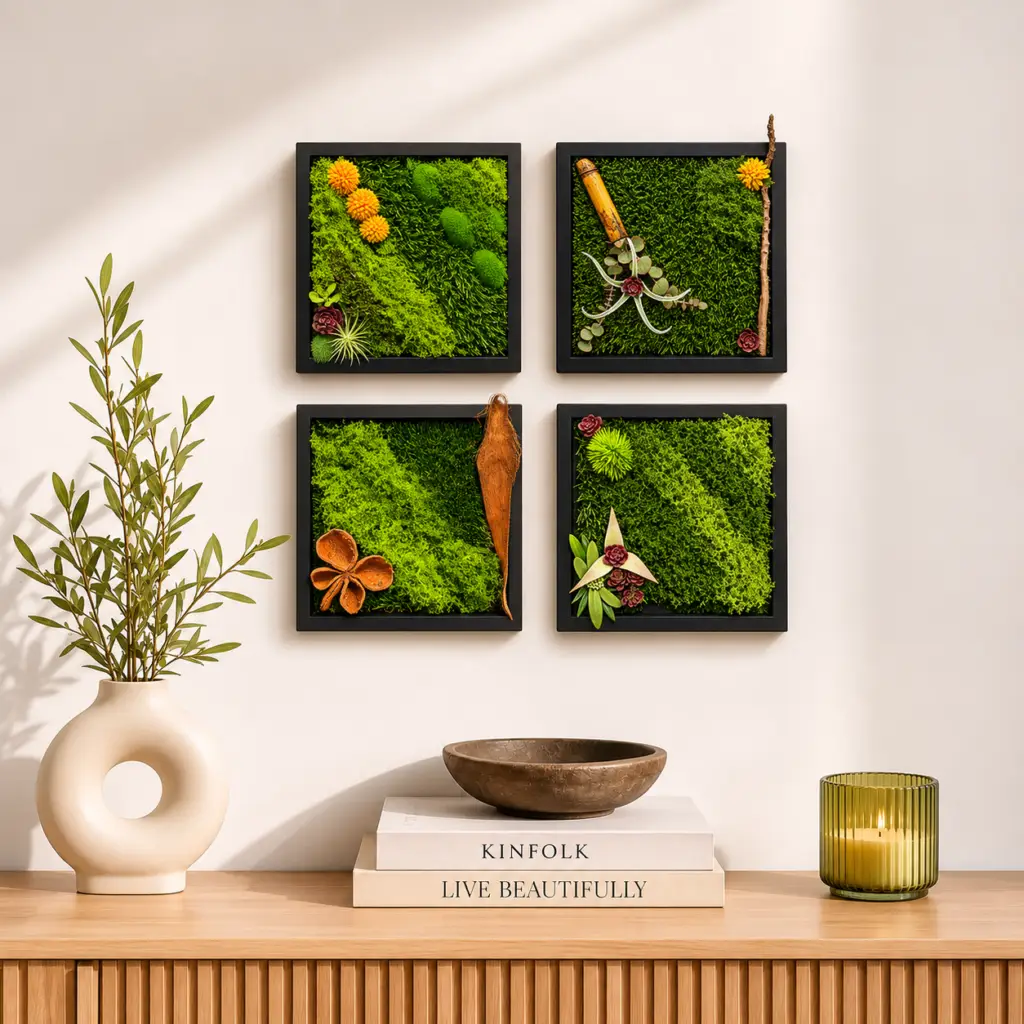
This low maintenance is part of what makes framed moss wall art such a practical choice for softening a plain wall. You get the visual and textural benefits of a natural material without the watering, pruning, or worrying that comes with live plants. For anyone who wants a softer, warmer interior but does not have time for regular plant care, moss is a smart alternative.
Bringing it all together
Softening a plain interior wall does not require a major renovation. A single well-chosen piece of preserved moss wall art can change the feel of a room by adding texture, warmth, and a natural focal point. The key is to choose the right size, place it thoughtfully, and match the frame to the room's existing style. Whether you use it as a standalone piece or as part of a gallery wall, moss offers a simple way to make a bare wall feel finished and inviting.
For practical help with sizing, framing, and installation, mosswallart.design provides clear information that can guide your choices. The result is a wall that feels softer, more layered, and more connected to the natural world, without the upkeep that usually comes with bringing nature indoors.
❧